Each person has periods when even elementary everyday activities — washing dishes, doing housework, walking a dog — are given to a person with difficulty. Here it is not even worth mentioning the complex tasks and projects, occupation with creativity. Psychologists in this situation say that a person is exhausted from the resource state — that is, a person does not have enough strength to feel comfortable, rested and joyful. This can happen due to some kind of illness or severe fatigue, overwork, problems at work, due to conflicts between people, or misunderstanding on their part, and so on. Such weakness and apathy may disappear if the person relaxes and rests well, and may also indicate depression in the initial stages, if this does not stop even after rest and is a reason to seek help from a specialist. In this article, we deal with what makes us lose interest in life, how to deal with it alone and talk about human needs in order to understand ourselves and help ourselves on our own.
Let's make a quick disclaimer: we are not currently considering the setting of a depressive episode. It can be suspected when it is expressed in indifference, in a detached attitude to what is happening around, in the absence of a desire for any activity [1], the absence of a negative and positive attitude towards reality [2]. In this case, unconditionally go for a consultation with a specialist at times, the lack of enthusiasm for life hints to us that we are marking time on the «passed» level, losing interest in what is happening around. And it seems that there are even thoughts and desires, that you would like to embody, but you can’t start them in any way. It is always scary to take on so soothing meting new, and especially if it is something fundamentally new. The grasp of our desires sometimes terrifies us. And then it's easier to lie to yourself something in order to postpone them for a long, long time. The development of big plans is important, but it must be completed at some time. And you need to understand that you will never feel completely ready for the new — it is simply impossible. At some point, it's time to act. And if fear and excuses outweigh the first month or even the first year, it may be worth analyzing this situation with a psychologist.
People most often define goals as clear-cut achievements. And they are caught up in a relentless pursuit of them: if they have completed a project, take on two more; if you have earned money for a flat, now earn money for another one; and take on more and more. And if it doesn't work out, one just gets caught in a 'spell of hell', in which one feels like a total loser because of what one thinks you are, the anxiety because of these doubles. In the bestseller Mark Manson says «And here's the problem. Our society, on the wonders of consumer culture and through social media («look how cool I live»), has raised an entire generation of people who believe that negative experiences-anxiety, fear, guilt-are not normal.»[3] It's important to understand that the targets can be intangible things, and even a person's psychological states. For example, if I've never felt good and confident in life, but wish I had, that's also a goal. Or if I have a good job but lack human warmth. Adding something to one's existence that is lacking, or, conversely, removing something superfluous (unkind or that makes one feel inferior and insufficient) are also goals, and quite ambitious.
However, accomplishing them in the same way that material achievements are obtained is unlikely to be achieved. Rather, you need to pay attention to yourself, to try to analyze and know yourself, and to pay constant attention to your feelings. By getting in touch with your own emotions, you begin to discover what makes you happy and generates enthusiasm, and what, on the contrary, makes you feel uncomfortable. Sometimes it takes more than a year. Talking to a psychologist and practicing things to get in touch with feelings and physical sensations can help: diary, books, meditation.
Psychological factors why you don't want to do anything:
- Hard pressures — If you set unrealistic goals or make excessive demands on yourself that are impossible to meet, you often experience a sense of 'futility' and an unwillingness to move on;
- An inability to understand one's goals and values causes a feeling of confusion about what to do and how to proceed;
- Infantilism or immaturity — expecting others to take responsibility;
- Learned helplessness — fear of doing things on one's own because of the expectation of punishment for any action;
- Acute stress reaction — «stupor» and insensitivity as a momentary response to a highly traumatic event or stress.
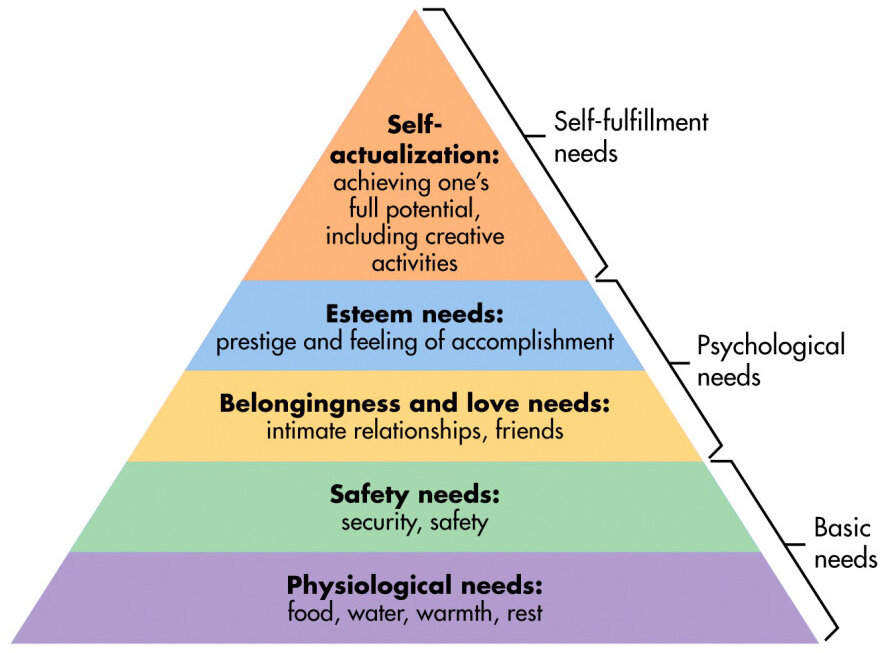
Psychologist Abraham Maslow created a human needs pyramid, in which, as we can see (picture 1) respect, recognition and fulfillment are at the top of the list. He points out that a person needs to feel loved, valued and respected.
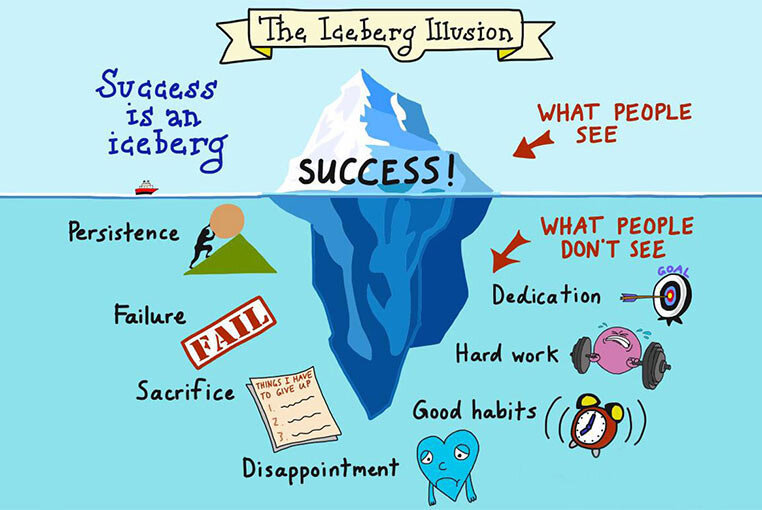
We have grown accustomed to expecting praise from others, but not from ourselves. We celebrate only great achievements and goals in this life: a promotion at work, going to university, buying something expensive. But we should not forget that the road to the big goal consists of small steps that no one notices. It's like an iceberg, everyone sees only the top, but has no idea what's hiding the bottom, which is the main part of the iceberg. (picture 2). Consequently, instruct yourself to praise yourself for even the smallest victories. In this way, you will motivate yourself for more victories, as well as raise your self-esteem, which is also important.
People are used to thinking that laziness and doing nothing is bad. They don't allow themselves to just lie on the sofa and do nothing, they force themselves to constantly get out of their comfort zone and do something. We start to blame ourselves when we do nothing and force ourselves to work no matter what. But this way, we only make things worse for ourselves and squeeze out the last bit of energy instead of recovering the energy we have used up. The desire to do nothing may hide insecurity, fear of failure, illness or avoiding a necessary task. In any case, when you feel you are running out of energy, pause, let yourself breathe out, get some sleep and analyze your condition.
Most people love to spend their holidays on social media, posting videos, watching them or just flicking through their Instagram feeds. After all, this is the 21st century. But our brain at this time has absolutely no rest, but quite the contrary — it is engaged in digestion of information and work. According to some studies, social networks can contribute to depression, as people face manipulation and negativity. In addition, posts about other people's achievements and successes can shake a person's self-esteem. Therefore, when you are recuperating, you should give priority to going out with friends or listening to music, or to reading books and meditating.
During apathy, we mistakenly think that we will wake up in the morning in a great mood. And if we do feel a burst of energy the next day, we somehow get straight to work. And in the evening we feel terrible and exhausted again. We have to slowly get back to our normal rhythm of life, without rushing. But there has to be a balance in everything: denying your condition and overloading yourself with things will not help. Start by doing things a little at a time, as much as you can manage — 5, 10 or 15 minutes a day. This could be making breakfast, going for a walk or reading a book. And if your apathy persists, don't be afraid to ask a professional for help. He or she can help you identify the root causes of this condition and cope with depression.